
Marine hydraulic systems work in one of the toughest environments on earth. Saltwater exposure, constant vibration, extreme temperature swings, and the need for absolute reliability make component selection critical. Among the most important choices you’ll make is picking the right hydraulic gear pump for your vessel’s hydraulic circuit.
Whether you’re powering a steering system, deck winch, anchor windlass, or crane, the pump you choose directly affects performance, fuel efficiency, and long term maintenance costs. This guide breaks down everything you need to know to select the right hydraulic gear pump for your marine application.
What Exactly Is a Hydraulic Gear Pump?
A hydraulic gear pump is a positive displacement pump that uses the meshing of gears to move fluid through a hydraulic circuit. As the gears rotate, fluid is trapped between the gear teeth and the pump housing, then carried around the outside of the gears and pushed out through the outlet port at pressure.
Gear pumps are prized in marine applications for their simplicity, durability, and value compared to piston or vane pumps. They handle contamination reasonably well, tolerate the harsh marine environment, and require relatively low maintenance, all qualities that matter when a vessel is far from a service dock.
Why the Right Pump Choice Can Make or Break Your Marine System
Marine hydraulic systems aren’t like industrial systems on land. They face:
- Constant motion and vibration from waves and engine operation
- Saltwater and humidity exposure that accelerates corrosion
- Space and weight constraints onboard
- Variable load demands, from steady steering pressure to sudden winch loads
- Limited access for repairs while at sea
Choosing the wrong hydraulic gear pump can lead to cavitation, overheating, seal failure, or premature wear, all of which are far more costly to fix at sea than on land. This makes upfront selection one of the most important engineering decisions in your hydraulic system design.
The Three Main Types of Hydraulic Gear Drive Pump for Marine Use
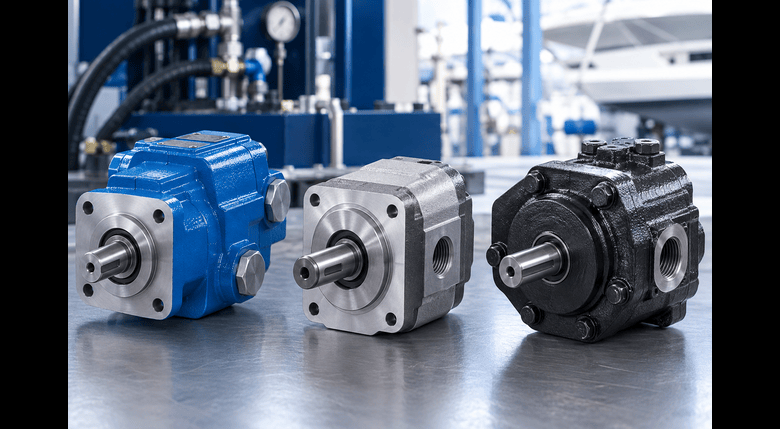
Hydraulic gear drive pumps are available in several designs, each built to meet specific performance requirements aboard marine vessels. Choosing the right pump depends on factors such as operating pressure, fluid viscosity, flow rate, and the application it will support. As a key component of marine hydraulic systems, these pumps power everything from steering systems and deck machinery to hydraulic power units. Understanding the differences between the three main types of hydraulic gear drive pumps helps ensure reliable performance, longer equipment life, and efficient vessel operation.
External Gear Pumps: The Marine Industry Workhorse
External gear pumps use two identical gears, a drive gear and a driven gear, meshing together outside one another. They’re the most common type in marine applications thanks to their simple design, high reliability, and ease of maintenance. They work well for steering systems, hydraulic power units, and general fluid transfer where moderate to high pressure is needed.
Internal Gear Pumps: Built for Quiet Performance
Internal gear pumps use one gear rotating inside a larger internal ring gear. They run quieter and smoother than external gear pumps, making them a good fit for applications where noise reduction matters, such as passenger vessels or yachts. They’re also efficient at handling higher viscosity fluids.
Gerotor Pumps: Compact Power for Auxiliary Systems
A variation of the internal gear pump, gerotor pumps are compact and efficient at lower pressures. They’re often used in auxiliary marine systems like lubrication circuits or low pressure fluid transfer tasks rather than primary power circuits.
Seven Key Factors to Weigh Before You Buy
Choosing the right hydraulic gear drive pump requires more than comparing price and size. Consider these seven key factors before making a purchase:
1. Get Your Flow Rate and Pressure Requirements Right
Every marine hydraulic application has a specific flow rate (measured in liters per minute or gallons per minute) and pressure rating (measured in bar or PSI) it needs to operate correctly. Steering systems typically require steady, moderate pressure, while winches and cranes may need higher peak pressure for lifting loads. Match the pump’s rated flow and pressure to your system’s actual demand, with some margin for peak loads.
2. Prioritize Material and Corrosion Resistance
Since marine environments are relentless on metal components, look for pumps constructed with corrosion-resistant materials such as marine-grade bronze, stainless steel, or coated aluminum housings. Seals should be rated for saltwater exposure and compatible with your hydraulic fluid type. This is especially important for vessels equipped with Yacht Automation systems, where reliable hydraulic performance supports the smooth operation of automated steering, lifting, and other integrated onboard functions.
3. Confirm Fluid Compatibility
Confirm the pump is compatible with the hydraulic fluid used in your system, whether that’s mineral oil, biodegradable fluid, or fire resistant fluid. Using an incompatible fluid can degrade seals and reduce pump lifespan significantly.
4. Check Mounting and Drive Configuration
Marine Gear Pump are typically driven by the main engine, a PTO (power take off), or an electric motor. Consider how the pump will be mounted and driven within your existing engine room layout, and verify shaft type and rotation direction match your drive source.
5. Consider Noise and Vibration Levels
On smaller vessels or those with living quarters near the engine room, noise matters. Internal gear pumps or pumps with vibration dampening mounts can significantly improve onboard comfort.
6. Factor In Efficiency and Fuel Consumption
A more efficient pump reduces the load on your engine, which translates into fuel savings over time, an important factor for commercial vessels running long hours. Look for published volumetric and overall efficiency ratings when comparing pump models.
7. Plan for Maintenance Access and Serviceability
Since at sea repairs are difficult, choose a pump designed for straightforward inspection and serviceability, with readily available seal kits and spare parts, ideally from a manufacturer with global support.
Which Pump Fits Which Application? A Quick Reference Guide
| Application | Recommended Pump Type | Key Priority |
| Steering systems | External gear pump | Consistent pressure, reliability |
| Deck winches / windlass | External gear pump | High pressure capability |
| Cranes / davits | External or piston assisted gear pump | Peak load handling |
| Passenger comfort systems | Internal gear pump | Low noise |
| Lubrication / auxiliary circuits | Gerotor pump | Compact, low pressure efficiency |
Five Common Mistakes to Avoid When Choosing a Pump
- Oversizing or undersizing the pump relative to actual system demand
- Ignoring fluid viscosity changes across seasonal temperature swings
- Skipping corrosion resistant materials to save upfront cost
- Failing to verify drive shaft compatibility before installation
- Neglecting regular seal and fluid inspection, which shortens pump life
FAQs
With proper maintenance and clean fluid, a marine Yacht hydraulic pump typically lasts between 10,000 and 20,000 operating hours. Lifespan depends heavily on fluid cleanliness, operating pressure, and how consistently the vessel is exposed to saltwater and vibration.
Most external and internal gear pumps can be rebuilt by replacing worn seals, bushings, and gears rather than replacing the entire unit. However, if the pump housing is corroded or scored, full replacement is usually more cost effective than repeated repairs.
Common warning signs include unusual whining or grinding noises, a drop in system pressure, slower than normal operation of steering or winches, overheating fluid, and visible fluid leaks around the shaft seal. Catching these early prevents more expensive downstream damage.
Standard external gear pumps handle moderate to high pressure well, but for very high pressure lifting applications, some vessels pair gear pumps with piston assisted systems for extra load capacity. Always check the pump’s maximum pressure rating against your crane or winch’s peak demand.
This depends on the pump manufacturer’s specifications, but most marine systems use mineral based hydraulic oil or biodegradable hydraulic fluid where environmental regulations require it. Always confirm seal material compatibility before switching fluid types.
Routine inspection is recommended every 250 to 500 operating hours, with a full fluid and filter check at least once per season. Vessels operating in harsher conditions or saltwater spray zones may need more frequent inspections.
For most small boats and steering applications, external gear pumps offer the best balance of cost, reliability, and ease of maintenance. Internal gear pumps are worth the extra investment mainly when quiet operation is a priority, such as on passenger or leisure vessels.
Cnclusion
Selecting the right hydraulic fluid pump for your marine system comes down to understanding your vessel’s specific flow, pressure, and environmental demands. External gear pumps remain the workhorse choice for most steering and lifting applications, while internal gear and gerotor pumps serve more specialized, quieter, or auxiliary roles. At CFBoats, our experienced marine technicians help yacht owners select, maintain, repair, and replace hydraulic pumps to ensure reliable performance, maximum efficiency, and long-term dependability on the water.
Take the time to match pump specifications to your actual operating conditions, prioritize corrosion resistant construction, and choose a design that’s easy to service at sea. Doing so will extend the life of your hydraulic system, reduce downtime, and keep your vessel running smoothly no matter what conditions you’re navigating.
If you’re unsure which Yacht hydraulic pump best fits your marine setup, consulting with a marine hydraulics specialist can help you avoid costly mismatches and ensure your system performs reliably for years to come.