
If your bow thruster has stopped working, you’re not alone, and getting stuck mid maneuver in a tight marina is one of the more stressful moments a boater can face. A bow thruster not responding is one of the most common issues yacht owners run into, especially since this system is so heavily relied upon for close quarters handling. So when it suddenly stops responding, it throws off everything. The good news is that most bow thruster failures come down to a handful of common causes, many of which you can diagnose yourself before calling in a marine technician.
In this guide, we’ll walk through why your bow thruster may not be working, how to troubleshoot the problem step by step, and when it’s time to bring in a professional for repairs.
What Is a Bow Thruster and Why It Matters
A bow thruster is a small propeller mounted in a tunnel near the bow of your boat that allows you to push the front of the vessel sideways without relying on forward or reverse throttle. This makes docking, undocking, and maneuvering in marinas significantly easier, especially for larger boats and yachts that don’t turn on a dime.
Because the bow thruster plays such an important role in tight space handling, any failure can feel immediately disruptive. Understanding the system’s basic components, including the motor, propeller, control panel, and electrical connections, makes it much easier to pinpoint what’s gone wrong when the thruster stops responding.
Common Signs of a Bow Thruster Not Responding Properly
Before diving into repairs, it helps to recognize the specific symptoms you’re experiencing, since different issues point to different root causes. You might notice no response at all when you press the control button, a clicking or humming noise with no propeller movement, a thruster that works intermittently or cuts out under load, reduced power or a sluggish response compared to normal, or warning lights and error indicators on the control panel. Identifying which of these matches your situation is the first step toward an accurate diagnosis.
Top Reasons a Bow Thruster Stops Responding
A bow thruster can fail for a number of reasons, and pinpointing the right one makes all the difference between a five-minute fix and an expensive repair bill. In most cases, the culprit falls into one of three buckets: a power delivery problem, a mechanical obstruction, or a worn-out component inside the motor or control system. Below are the most common issues boat owners run into, starting with the simplest to check and moving toward those that typically need a professional’s attention.
Battery or Power Supply Issues
Bow thrusters draw a significant amount of current, especially on startup. A weak, undercharged, or failing battery is one of the most frequent culprits behind a bow thruster not working. If your battery voltage is low, the thruster motor may not receive enough power to engage, even though the control panel appears to function normally.
Tripped Circuit Breaker or Blown Fuse
Most bow thruster systems include a circuit breaker or fuse designed to protect the motor from overload. If the thruster has been used excessively, or if there’s a short somewhere in the wiring, the breaker may trip and cut power entirely. This is often mistaken for a motor failure when it’s actually a simple protective response. During a professional gangway repair or marine electrical inspection, technicians will check the breaker, fuse, and wiring to restore safe and reliable operation.
Corroded or Loose Electrical Connections
Marine environments are harsh on electrical systems. Saltwater exposure, humidity, and vibration can all lead to corrosion at connection points, particularly at the battery terminals, solenoid, and control wiring. Corroded or loose connections interrupt the electrical signal needed to activate the thruster motor.
Faulty Solenoid or Relay
The solenoid acts as a switch, sending power from the battery to the thruster motor when you engage the control. If the solenoid has failed or is sticking, the motor won’t receive power even if everything else in the system is functioning correctly this is one of the most common reasons behind a bow thruster not responding. A clicking sound without motor movement is a classic sign of solenoid trouble.
Worn or Damaged Motor Brushes
Over time, the carbon brushes inside the thruster motor wear down, reducing electrical contact and motor performance. This often causes an intermittent or weakening response before the thruster eventually fails to work altogether.
Debris in the Propeller Tunnel
Even when the motor is powered correctly, the propeller may fail to turn if marine growth, fishing line, or debris has become lodged in the thruster tunnel. This kind of mechanical blockage is a frequent culprit, distinct from any electrical fault.
Control Panel or Joystick Malfunction
Sometimes the problem isn’t the thruster at all, but the control interface. A faulty switch, joystick, or wiring at the helm can prevent the signal from ever reaching the thruster motor.
Step by Step Troubleshooting Guide
Start by checking the battery voltage with a multimeter to confirm the dedicated thruster battery is holding an adequate charge. Next, inspect the circuit breaker, resetting it if tripped and monitoring whether it trips again during use. Examine all electrical connections for corrosion, loose terminals, or visible wear near the battery, solenoid, and control panel. Listen for the solenoid, since a clicking sound with no thruster movement usually points to solenoid or motor issues. If accessible, inspect the tunnel for marine growth or obstructions blocking the propeller. Finally, test the control panel by engaging the thruster from an alternate control point if your system has one, to rule out a helm side issue.
If these steps don’t resolve the issue, the problem likely lies deeper within the motor or wiring harness, and professional diagnosis is recommended.
When to Call a Professional for Bow Thruster Repair
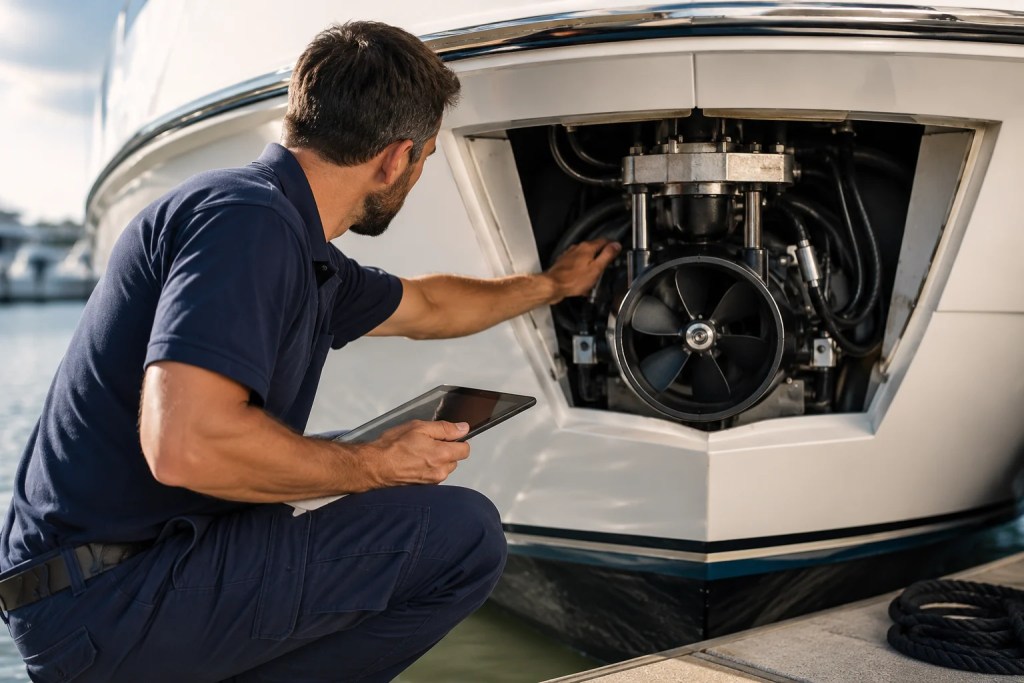
While basic troubleshooting can resolve many issues, some problems require specialized tools and marine electrical expertise. It’s time to contact a professional if the motor doesn’t respond even after confirming power and connections are solid, if you suspect internal motor damage or worn brushes, if the solenoid or relay needs replacement, if there’s evidence of water intrusion in the motor housing, if the issue keeps recurring despite repeated fixes, or if the Automation system controlling the motor is malfunctioning or requires professional diagnosis.
Attempting advanced electrical or motor repairs without the right experience can lead to further damage or safety hazards, particularly given the marine environment’s demands on equipment.
Preventing Future Bow Thruster Problems
Regular maintenance goes a long way toward avoiding unexpected failures. Make it a habit to inspect and clean electrical connections each season, test the thruster regularly even when you’re not actively docking, keep the battery charged and in good condition, check the tunnel for debris or marine growth periodically, and schedule a professional inspection annually, especially before peak boating season.
Staying proactive with maintenance significantly reduces the chances of your bow thruster not responding or your bow thruster not working exactly when you need it most.
FAQs
A sudden failure is most often caused by a tripped circuit breaker, a drained or weak battery, or a loose electrical connection. Since bow thrusters draw high current in short bursts, even a minor power issue can cause the system to stop responding without warning.
A clicking sound with no propeller movement usually points to a faulty solenoid or relay. The solenoid is trying to send power to the motor, but a stuck or failing component is preventing that power from reaching the propeller.
Many common issues, such as a tripped breaker, corroded terminals, or debris in the tunnel, can be checked and resolved without professional help. However, motor repairs, solenoid replacement, or wiring issues are best left to a qualified marine technician.
Most boat owners benefit from an annual inspection, ideally before the start of boating season. Regular use and testing throughout the season also helps catch minor issues before they turn into full failures.
No. Bow thrusters are designed for short bursts of use rather than continuous operation. Running the thruster for extended periods can overheat the motor and trip the circuit breaker as a protective measure.
Use a multimeter to check the dedicated thruster battery’s voltage while attempting to engage the thruster. A significant voltage drop under load is a strong indicator that the battery can’t supply enough current to run the motor.
Conclusion
A bow thruster that stops working can turn a routine docking maneuver into a stressful ordeal, but most issues stem from identifiable causes like power supply problems, corroded connections, or worn components. Working through a simple troubleshooting checklist can often get you back up and running. If the issue persists, trust CF Boatworks for expert marine hydraulic repair services. The experienced technicians at CF Boatworks can accurately diagnose the problem and ensure it is repaired correctly the first time, helping you get back on the water with confidence.
If your bow thruster not responding or continues to give you trouble despite basic checks, reaching out to an experienced marine technician ensures your vessel stays reliable and ready for smooth, confident maneuvering every time you’re on the water. Early diagnosis of a bow thruster not responding can help prevent more costly repairs and unexpected failures.