
A gangway, often called a passerelle on larger yachts, is one of those systems you barely think about until it stops working. Then, suddenly, it’s the only thing standing between you and getting off the boat. If your gangway or passerelle is refusing to extend, retract, or move smoothly, you’re not alone. This is one of the most common mechanical complaints among yacht owners, and in most cases, it comes down to a handful of predictable issues that gangway repair professionals see time and again.
This guide walks through the most frequent causes of gangway malfunctions, simple checks you can do yourself, and when it’s time to bring in a professional for gangway repair.
Why Your Gangway or Passerelle Won’t Extend
Before calling a technician, it helps to understand what’s actually going on inside the system. Most passerelle mechanisms rely on a combination of hydraulic or electric actuators, telescoping rails, control relays, and safety sensors, and a failure in any one of these can stop the whole unit from moving.
Hydraulic Fluid Issues
If your gangway runs on a hydraulic system, low fluid levels, air trapped in the lines, or a failing pump are among the top reasons it won’t extend. Hydraulic systems need consistent pressure to move the arm smoothly, and even a small air pocket can cause jerky movement or a complete stall. It’s worth checking the fluid reservoir level, looking for visible leaks around hoses and fittings, and listening for unusual pump noise when activating the gangway.
Electrical and Wiring Problems
Corrosion is the enemy of any marine electrical system, and gangway wiring is no exception. Saltwater exposure, humidity, and vibration over time can loosen connections or corrode terminals, cutting power to the motor or control switch. Check for blown fuses or tripped breakers, corroded connectors at the control panel, and loose battery terminals feeding the system. This is especially common on yachts where the gangway shares power or control circuitry with other hydraulic systems onboard, such as a yacht’s hydraulic swim platform both rely on similarly exposed wiring runs and connectors that take a beating from the marine environment, so if one system starts acting up, it’s worth inspecting the other for early signs of corrosion too.
Faulty Limit Switches or Sensors
Most modern passerelle systems use limit switches or proximity sensors to control how far the gangway extends and to prevent it from over traveling. If a sensor is misaligned, dirty, or damaged, the control unit may refuse to send a movement command at all, a built in safety feature that can look like a total failure.
Motor or Actuator Failure
Whether your gangway uses an electric linear actuator or a hydraulic ram, the motor itself can burn out or seize, especially if it’s been running under strain or hasn’t been serviced in a while.
Mechanical Obstructions and Rail Debris
Salt buildup, sand, and general marine debris can accumulate along the telescoping rails or hinge points, physically blocking the gangway from sliding out. This is one of the simplest issues to fix and one of the most overlooked.
Remote Control or Control Panel Malfunction
Sometimes the problem isn’t the gangway at all, it’s the remote or control panel sending the command. Dead batteries, water intrusion, or a faulty control board can all mimic a mechanical failure.
Step by Step Troubleshooting Checklist
Before contacting a marine technician, go through this quick troubleshooting checklist to identify any common issues that may be preventing your hydraulic swim platform from operating properly.
Start by checking the power source to confirm the breaker is on and the battery bank has adequate charge. Next, inspect the control panel and remote, replacing batteries and testing both wired and wireless controls if available. Look for visible obstructions and clear salt crust, sand, or debris from the rails and hinge points. Listen for motor or pump activity, since a humming sound with no movement often points to a jammed mechanism rather than an electrical fault. Check hydraulic fluid levels and top off if low, but don’t ignore a recurring drop, since it usually signals a leak. Examine limit switches for visible damage, corrosion, or misalignment near the extension points. Finally, test the manual override; many systems include a manual release, so use it carefully to see if the gangway moves freely by hand.
If you’ve gone through these steps and the gangway still won’t budge, it’s time to bring in a marine technician who specializes in gangway repair.
When to Call a Professional for Gangway Repair
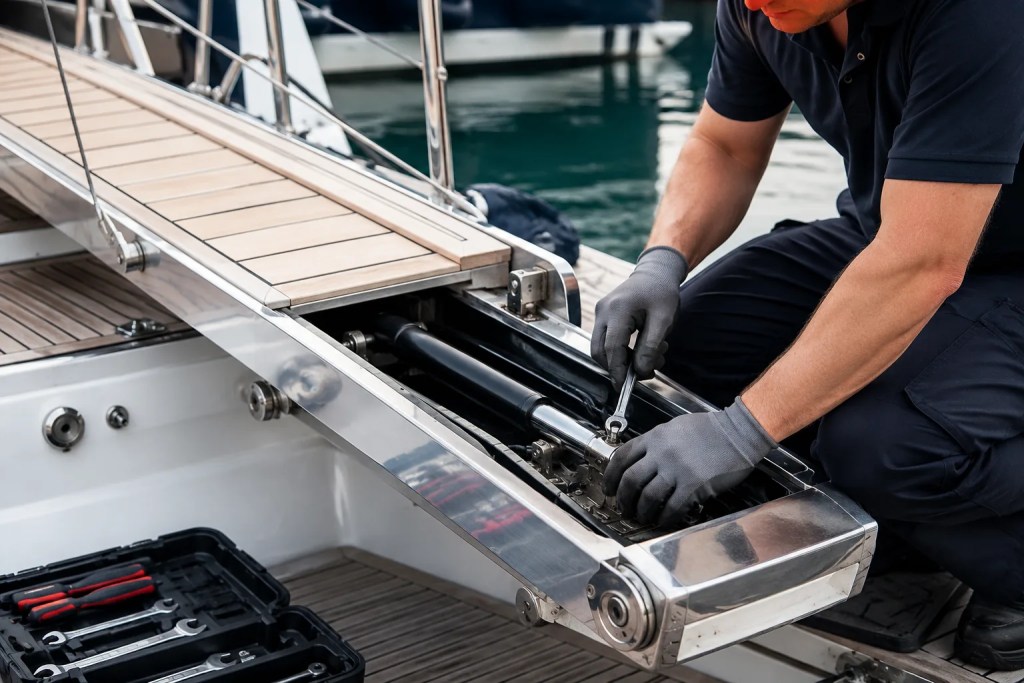
Some issues are safe for an owner or crew member to handle. Others involve hydraulic pressure, electrical systems, or structural components that require specialized tools and marine certified expertise. Consider professional gangway repair when the hydraulic system shows signs of a leak or pressure loss, the motor or actuator has failed and needs replacement, wiring damage extends beyond a simple connector, the gangway extends unevenly or makes grinding or straining noises, or safety sensors are triggering false stops repeatedly.
A qualified technician can diagnose the exact failure point, source the correct replacement parts for your gangway’s make and model, and make sure the repair meets marine safety standards — something that’s especially important on a system passengers and crew step onto every day. This often extends beyond the mechanical components alone, covering Electrical Systems Lighting & Electronics as well, since many modern gangways rely on these for safe, reliable operation.
Preventing Future Gangway Problems
Regular maintenance goes a long way toward avoiding sudden breakdowns. A few habits worth building into your routine include rinsing rails and hinges with fresh water after saltwater exposure to prevent corrosion buildup, inspecting hydraulic lines periodically for wear, cracks, or seepage, testing the system monthly even when the yacht isn’t in active use to catch small issues early, scheduling annual professional servicing to check fluid levels, sensor calibration, and wiring integrity, and keeping the control panel dry and protected from direct spray when not in use.
Consistent care doesn’t just prevent breakdowns, it extends the lifespan of the entire gangway mechanism and reduces the odds of an expensive emergency repair down the line.
FAQs
This is typically caused by a limit switch misread, a hydraulic pressure drop, or debris partially blocking the rail.
Basic checks like power and wiring are fine for most owners, but motor and actuator replacement should be handled by a professional gangway repair technician to avoid further damage.
Most manufacturers recommend at least one full inspection per year, with more frequent checks for yachts in regular use or harsh saltwater conditions.
Costs vary widely depending on whether the issue is electrical, hydraulic, or mechanical, and whether parts need to be sourced for a specific make and model. A technician can usually provide an accurate estimate after an initial diagnostic inspection.
Conclusion
A gangway that won’t extend is rarely a mystery once you know where to look. Power, hydraulics, sensors, and simple debris account for the vast majority of failures. Running through a basic troubleshooting checklist can save you time and money, but when the issue goes beyond a quick fix, professional gangway repair from CF Boatworks ensures the job is done safely and correctly, keeping your crew, guests, and vessel moving without interruption.